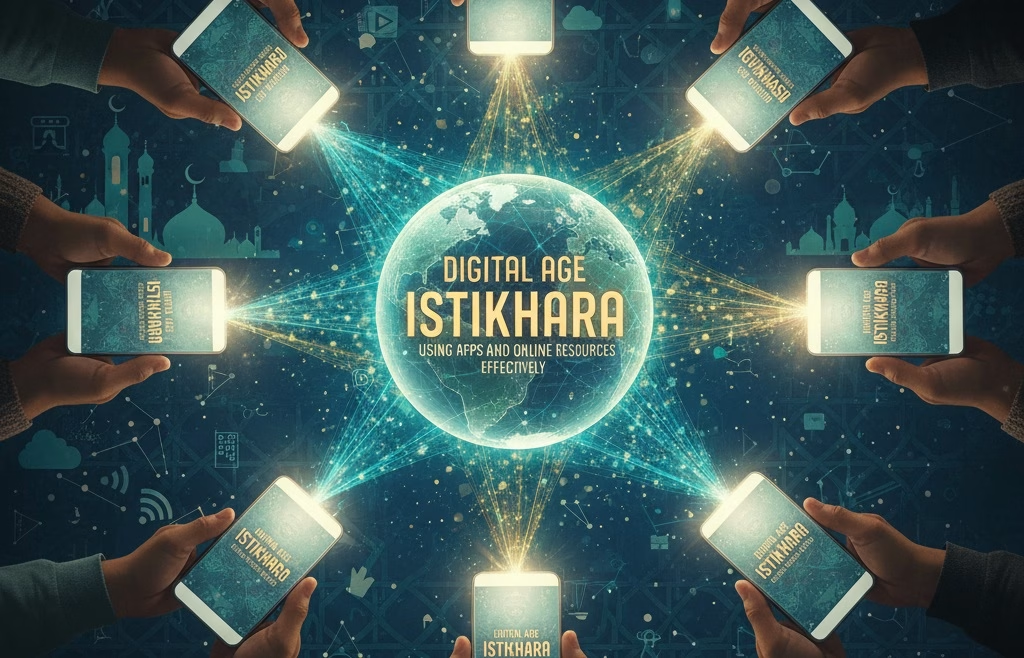
Digital Age Istikhara Using Apps and Online Resources Effectively
We live in a time where everything is connected to technology. We use our phones for almost everything. Shopping, studying, talking to friends, watching videos, and even learning about religion. So it makes sense that people are now using technology to learn about and perform Istikhara too.
But this raises some important questions. Is it okay to use apps for Istikhara? Can we really connect with Allah through a screen? Are these online resources helpful, or do they take away from the spiritual experience? Let me share my thoughts on this topic simply and honestly.
The Reality of Modern Life
First, let’s accept the reality. Most young people today spend more time on their phones than reading books. If someone wants to learn about Istikhara, they are more likely to search on Google or download an app than ask their parents or read a traditional book.
This is not necessarily a bad thing. Technology is just a tool. Like any tool, it can be used well or used badly. A knife can be used to cut vegetables or to hurt someone. Similarly, technology can help us get closer to Allah, or it can distract us from Him.
The important thing is how we use it.
What Online Resources Are Available
There are many online resources available for people who want to learn about Istikhara. Let me tell you about the different types.
First, some websites explain what Istikhara is and how to perform it. These websites have articles with step-by-step instructions. Some of them have the Arabic dua written out. Some have transliteration so you can read it in English letters. Some even have the translation so you understand what you are saying.
Then there are apps specifically made for Istikhara. These apps usually have features like prayer time reminders, the full dua in Arabic with translation, audio recitation of the dua, and some even have trackers where you can note down what you prayed Istikhara about and what happened.
There are also YouTube videos where scholars explain Istikhara. Some videos show you exactly how to pray the two rakats and then make the dua. These can be very helpful for visual learners.
Social media pages and groups also discuss Istikhara. People share their experiences and ask questions. Sometimes scholars answer questions in these groups.
Many websites now offer detailed guides about the istikhara prayer dua with proper pronunciation help, which is very useful for people learning it for the first time.
The Good Side of Using Technology
Let me start with the positive aspects of using apps and online resources for Istikhara.
The biggest benefit is accessibility. Not everyone has access to a scholar or a knowledgeable person who can teach them about Istikhara. Maybe you live in a place where there are very few Muslims. Maybe your parents don’t know much about it themselves. In such situations, online resources become very valuable.
I have a friend who grew up in a small town where there was no mosque nearby. Her family was Muslim, but they were not very practicing. When she wanted to learn about Islam, she used YouTube and Islamic apps. She learned how to pray properly from videos. She learned about Istikhara from websites. Without technology, she would not have had access to this knowledge.
Another benefit is that you can learn at your own pace. If you are reading an article or watching a video, you can pause, go back, reread, or rewatch. You don’t have to feel embarrassed about asking the same question multiple times. This is especially helpful for shy people.
Online resources also often have multiple formats. Some people learn better by reading. Some by listening. Some by watching. Apps and websites can provide all these formats, which makes learning easier for different types of people.
Technology also helps with language barriers. There are Islamic apps and websites in almost every language now. Even if your Arabic is weak, you can find resources in your own language that explain everything clearly.
The convenience factor is also important. You can access these resources anytime, anywhere. It’s 2 am and you suddenly want to know how to do Istikhara. You can just open your phone and learn. You don’t have to wait until morning to call someone or go to the library.
The Problems We Need to Watch Out For
However, there are also some problems and dangers when it comes to using technology for religious practices like Istikhara.
The first problem is authenticity. Not everything you find online is correct. Anyone can make a website or create an app. Some information online might be based on weak hadiths or cultural practices that are not actually part of Islam. Some might be completely made up.
I once saw a website that claimed you have to do Istikhara exactly 7 times, and if you don’t see a dream by the 7th time, it means Allah is angry with you. This is completely false and not based on any Islamic teaching. But someone who doesn’t know better might believe it and then feel unnecessarily worried.
So when using online resources, you need to be careful about where the information is coming from. Check if the website mentions its sources. See if it’s run by known scholars or Islamic organizations. Don’t just trust any random blog or app.
Another problem is the commercialization of religion. Some apps are made just to earn money through ads. They don’t really care about providing correct information or helping people spiritually. They just want clicks and downloads.
There are even some websites that offer online istikhara services where they claim someone else will pray Istikhara for you for a fee. This is very questionable. Istikhara is a personal prayer between you and Allah. While someone can make dua for you, the concept of paying someone to do Istikhara on your behalf is not correct and might even be a scam.
The third problem is that technology can make things too mechanical. When you use an app for everything, there is a risk of losing the spiritual connection. You might just be clicking buttons and playing audio without really thinking about what you are doing or feeling the presence of Allah.
Imagine someone who just plays the Istikhara dua audio on their phone while scrolling through Instagram. Technically, they heard the dua, but did they really pray? Did they really turn to Allah with sincerity? Probably not.
Technology should help us connect with Alla,h not replace that connection.
How to Use Apps and Websites Wisely
So, how can we use technology for Istikhara in a good way? Here are my suggestions.
First, use online resources mainly for learning, not for doing. Use websites and apps to learn how to perform Istikhara correctly. Read about when to do it and what it means. Watch videos to see how it’s done. But when it comes to actually praying, do it yourself without the phone.
Put your phone away when you pray. Don’t have the app open while praying. Learn the dua by heart or at least write it down on paper. The act of memorizing and focusing without digital distractions is important for the spiritual experience.
Second, verify information from multiple sources. If you read something on one website, check if other reliable websites say the same thing. If possible, ask a knowledgeable person to confirm. Don’t just believe everything you see online.
Look for resources created by known Islamic scholars or reputable organizations. For example, websites run by major Islamic universities or well-known scholars are usually more reliable than random blogs.
Third, use technology as a supplement, not a replacement. If you have access to a local mosque or Islamic center, or a knowledgeable family member, use those resources first. Let technology fill the gaps not be your only source.
For example, if you learned about Istikhara from an app, but you have a question about a specific situation, talk to an actual person if possible. Human guidance combined with online learning is the best approach.
Fourth, be mindful of your intention. Why are you using this app or website? Is it genuinely to learn and get closer to Allah? Or is it just because everyone else is using it or because it’s trendy? Check your intention regularly.
Fifth, use the good features and ignore the gimmicks. Many apps have useful features like prayer time reminders or audio recitations. Use these. But ignore features that seem more like entertainment than actual religious benefit.
Some apps have things like Istikhara result calculators or dream interpretation tools that claim to tell you what your Istikhara means. These are often not based on proper Islamic knowledge and can be misleading. Avoid such features.
Choosing the Right Apps and Websites
Not all Islamic apps and websites are created equal. Here is what to look for when choosing resources for learning about Istikhara.
Look for apps that provide sources for their information. Good apps will mention which hadith or Islamic ruling they are basing their content on. If an app makes claims without any sources, be suspicious.
Check the reviews and ratings if it’s an app. See what other users are saying. If many people complain about incorrect information or too many ads, it’s probably not a good choice.
Look for clean, simple interfaces. Apps that are overloaded with ads and pop-ups are usually more interested in making money than providing quality content.
See if the app or website is associated with any known Islamic organization or scholar. This adds credibility.
Check if the content is updated. Islamic apps that haven’t been updated in years might have outdated information or technical problems.
For websites, check the About Us section. See who runs the website and what their qualifications are. A website run by qualified scholars is more trustworthy than one run by anonymous people.
The Balance Between Traditional and Digital
I believe the best approach is to balance traditional Islamic learning with modern technology.
Traditional learning means learning from scholars, teachers, parents, and books. This has been the way Muslims have learned for centuries. There is a special blessing in learning directly from a teacher. There is accountability, and you can ask questions and get personalized guidance.
But we also live in a digital world, and we cannot ignore that. Technology has made knowledge accessible to millions of people who would otherwise never have access to it.
So use both. Learn the basics of Istikhara from online resources if that’s your starting point. Watch videos, read articles use apps to help you memorize the dua. But also try to connect with real people. Attend classes at your local mosque if possible. Ask questions to knowledgeable family members.
The digital resources can help you get started, but human connection and traditional learning will deepen your understanding.
Teaching Others About Digital Resources
If you are someone who knows about good Islamic apps and websites, share that knowledge with others. Many people, especially older folks, don’t know how to find reliable resources online.
Help your parents or grandparents download a good Islamic app. Show them how to use it. Teach them how to verify if a website is trustworthy.
At the same time, warn them about the dangers. Tell them not to believe everything they see online. Teach them to check sources and ask questions.
This is especially important for young children and teenagers. They are growing up with technology, and they will naturally turn to their phones for religious questions. Guide them towards good resources before they stumble upon bad ones.
The Spiritual Heart of Istikhara
With all this talk about apps and technology, we must not forget the real heart of Istikhara. Istikhara is not about having the perfect app or knowing the dua perfectly. It’s about having a relationship with Allah.
It’s about humility. It’s about admitting that you don’t know what is best for you and asking Allah to guide you. It’s about trust. It’s about believing that Allah will show you the right path.
No app can give you this. No website can create this feeling in your heart. Technology can teach you the method, but only you can bring the sincerity and faith.
So whether you learn Istikhara from an app or from your grandmother, the most important thing is that you do it with a sincere heart. You pray with focus, and you trust Allah with your decision.
Personal Experience
Let me share my own experience with using technology for Islamic learning, including Istikhara.
I first learned about Istikhara from my mother when I was young. She taught me the basic concept, but I did not really understand how to do it properly. Years later, when I was in college and facing some big decisions, I wanted to do Istikhar, but I had forgotten the details.
I searched online and found several websites explaining it. I also downloaded an app that had the dua in Arabic with transliteration and translation. The app also had audio so I could hear how to pronounce it correctly.
These resources were very helpful for me to relearn what my mother had taught me. I used the app for a few weeks until I memorized the dua. Then I stopped using the app and just prayed on my own.
The app was useful as a learning tool, but I did not want to become dependent on it. I wanted to pray Istikhara from my heart, not from my phone.
So for me, technology was a bridge. It helped me get from not knowing to knowing. But once I learned, I put the phone away and focused on the actual spiritual practice.
What About Virtual Islamic Consultations
Some people ask whether it’s okay to consult with a scholar online about their Istikhara or their decision.
I think this is perfectly fine. If you cannot meet a scholar in person, but you have a question, consulting them through email or video call is a good alternative.
Many scholars now offer virtual consultations. Some have websites where you can submit questions. Some do live sessions on social media where they answer questions.
This is one of the great benefits of technology. It breaks down geographical barriers. You can get advice from a knowledgeable person even if they live in another country.
However, be careful about who you consult. Make sure the person is actually qualified and knowledgeable. Just because someone has a YouTube channel or a big social media following does not mean they are a proper scholar.
The Future of Islamic Learning and Technology
Technology is only going to become more integrated into our lives. We will probably see even more advanced Islamic apps and tools in the future.
Maybe there will be virtual reality experiences where you can learn how to perform various Islamic practices. Maybe there will be AI assistants that can answer basic Islamic questions. Maybe there will be apps that use advanced algorithms to help you track your spiritual progress.
All of this can be beneficial if used correctly. But we must always remember that technology is just a tool. It can help us, but it cannot replace sincere faith and personal effort.
The danger is that we become lazy. We let apps do everything for us, and we stop using our own minds and hearts. That we become Muslims only on our screens but not in our actions and character.
So as technology advances, we must also advance in our wisdom about how to use it.
Final Thoughts
Using apps and online resources for learning about Istikhara is perfectly fine and can be very helpful. Technology has made Islamic knowledge accessible to millions of people around the world.
But we must use these tools wisely. We must verify information, be mindful of our intentions, and not let technology replace the actual spiritual experience.
Learn from apps but pray with your heart. Read websites, but also talk to real people. Use technology as a helper, not as a replacement for sincere faith.
Remember that Istikhara is ultimately about your relationship with Allah. No app can create that relationship for you. Only you can do that through sincere effort and trust.
May Allah guide us to use technology in ways that bring us closer to Him. May He help us benefit from modern tools while staying connected to the timeless wisdom of Islam. And may He always guide us to what is best in this life and the next.
Author Profile

-
Nadiya Khan is a graduate in Islamic Studies and an experienced writer with over 12 years dedicated to Islamic content writing. She specializes in sharing authentic duas and teachings from the Qur’an and Sunnah, drawing on trusted sources accepted across the four Sunni madhhabs Hanafi, Shafi’i, Maliki, and Hanbali.
Her work focuses on making Islamic knowledge clear, practical, and spiritually uplifting for Muslims seeking guidance, protection, and peace in daily life. Through the Islamic Dua Knowledge Centre, she helps readers strengthen their bond with Allah ﷻ by presenting duas with accuracy, context, and heartfelt reflection.
Nadiya’s mission is simple: to revive the practice of dua as a source of comfort, gratitude, and closeness to the Creator.